

$14.95 inc GST
Every anaesthetised patient is at risk of losing heat, and a cold patient has a slower, riskier anaesthetic and recovery. Jess Male explains how hypothermia happens and what you can do about it, starting from the moment you give the premed.
Includes the full recording (41 minutes), the presentation slides as a PDF, and a quiz. Pass the quiz to receive a certificate worth 1 AVNAT point.
Preventing hypothermia is one of the simplest ways to make anaesthesia safer. This webinar shows you where the heat goes and how to keep it in.
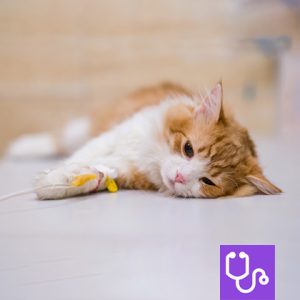
You’ll learn how hypothermia is defined, the normal rectal temperature ranges for dogs and cats, and the mild, moderate, severe and critical categories. Using the case of ‘Sooty’, a cat waiting for an exploratory laparotomy for a suspected foreign body, you’ll see why anaesthetised patients become cold: loss of muscle activity, cold surfaces, respiration and surgical incisions, skin prep, medications such as acepromazine and opioids, anaesthetic time and IV fluids.
You’ll then look at the patients most at risk, how hypothermia affects the cardiovascular system, coagulation, respiration, metabolic rate and oxygen demand, and the difference between passive and active warming. The webinar finishes with practical steps from premed through to recovery, including monitoring temperature at least every 15 minutes, warming lavage fluids, avoiding high oxygen flow rates and rewarming at 1 to 2°C per hour.
Presented by Jess Male, RVN, AVN, DipVN (ECC), RN, BSc (Biological & Biomedical), TAA.
What’s included
- Full recording (41 minutes)
- Presentation slides as a PDF
- Quiz, with a certificate worth 1 AVNAT point when you pass
Related products