
$14.95 inc GST
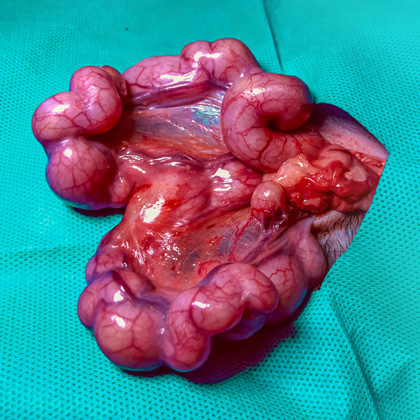
Pyometra is a life-threatening infection that often starts with subtle signs an owner can easily miss. Nicola Lakeman shows how the vet nurse helps pick it up early and supports these patients through stabilisation and treatment.
Includes the full recording (1 hour 4 minutes), the presentation slides as a PDF, and a quiz. Pass the quiz to receive a certificate worth 1 AVNAT point.
From the first phone call to recovery, nurses play a big part in pyometra cases. This webinar gives you the knowledge to recognise them and nurse them well.
You’ll start with what a pyometra is, when it usually occurs and how it develops, from repeated oestrous cycles and cystic endometrial hyperplasia through to secondary bacterial infection, most often with E. coli, Proteus or Klebsiella. You’ll look at whether the patient is an emergency, the range of presenting signs and how often each is seen, and the diagnostic work-up: haematology and biochemistry, electrolytes, C-reactive protein as a recovery marker, urinalysis and imaging.
The second half covers emergency care: fluid resuscitation, correcting hypokalaemia with the 2024 AAHA potassium supplementation guide, multimodal analgesia with care around NSAIDs, and the challenges of getting antibiotics to the site of infection. It finishes by comparing surgical management with medical management using prostaglandins, aglepristone and cabergoline, including which patients suit each approach, the goals of medical treatment and its prognosis.
Presented by Nicola Lakeman, MSc, BSc (Hons), RVN, CertSAN, CertVNECC, VTS (Nutrition).
What’s included
- Full recording (1 hour 4 minutes)
- Presentation slides as a PDF
- Quiz, with a certificate worth 1 AVNAT point when you pass
Related products