$14.95 inc GST
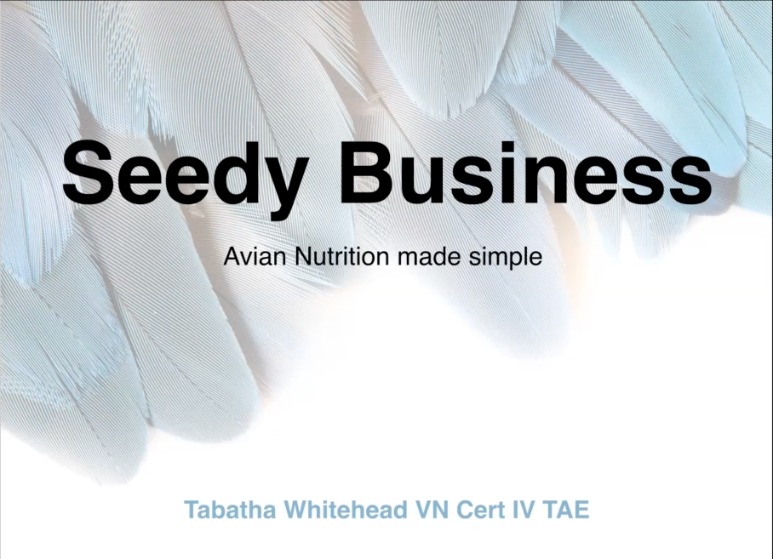
A bird left in a box on the counter can’t wait for someone to work out what to feed it. Tabatha Whitehead gives you practical tools to feed sick, injured and wild birds in the clinic, and to advise pet bird owners on diet.
Includes the full recording (1 hour) and a quiz. Pass the quiz to receive a certificate worth 1 AVNAT point.
Most birds won’t survive more than about 12 hours without food and water, yet injured wild birds often sit in a box at the clinic while everyone waits for a wildlife carer to call back. This webinar shows you what to do in the meantime.
Tabatha Whitehead explains how bird anatomy shapes feeding, from how light affects when birds eat to how beak shape tells you what to feed a bird without having to identify the species. You’ll follow food through the crop, proventriculus and gizzard, and learn how to set up housing, bowls and lighting so a bird in hospital will actually eat.
You’ll then learn which foods every clinic that takes birds should keep, and how to hand feed, syringe feed and crop feed safely, including formula consistency, temperature, crop needle choice and volume. The webinar finishes with deficiencies caused by seed-based diets, how diet drives breeding behaviours such as feather plucking and screaming, foods to avoid, and how to help owners convert a seed-eating bird to pellets.
What you’ll learn
- Using beak shape to choose the right food for any bird
- Setting up housing and lighting so hospitalised birds eat
- Hand feeding, syringe feeding and crop feeding safely
- Diet advice for owners on deficiencies and problem behaviours
Presented by Tabatha Whitehead.
What’s included
- Full recording (1 hour)
- Quiz, with a certificate worth 1 AVNAT point when you pass
Related products